
We're raising capital for two strategic objectives:
Market expansion of our alternative trading system
Add modern banking to our CapTech stack
Traction
Silicon Prairie has been building regulated private capital infrastructure since 2016 — not planning it, operating it. Here's what that looks like in numbers.
Founder Funded
$1.5M+
Built full-stack platform
from scratch
Hit $482K
revenue
The Problem of The 10-Year Trap
The average exit for a private investment takes 10–15 years, and the vast majority of startups will never reach an IPO or acquisition.
Investors who put money in during a community raise are effectively locked out of their own capital.
Life doesn't wait a decade for liquidity. When medical bills arrive, when tuition is due, or when circumstances change, private shares are historically impossible to sell. There is no marketplace, no mechanism, and no recourse.
Every new Regulation CF, Reg D, and Reg A+ offering compounds the problem — adding thousands more investors to a system that was never designed to give them an exit.
Since 2016, over 2.2 million everyday investors have put $2.8 billion into private companies through Regulation Crowdfunding — with virtually no path to get their money back.
The Path to Liquidity: The Alternative Trading System (ATS)
Silicon Prairie has built a regulated marketplace where investors can sell and buy private shares:
• Registered with the SEC
• Operational since 2022
• Completely proprietary
How it works:

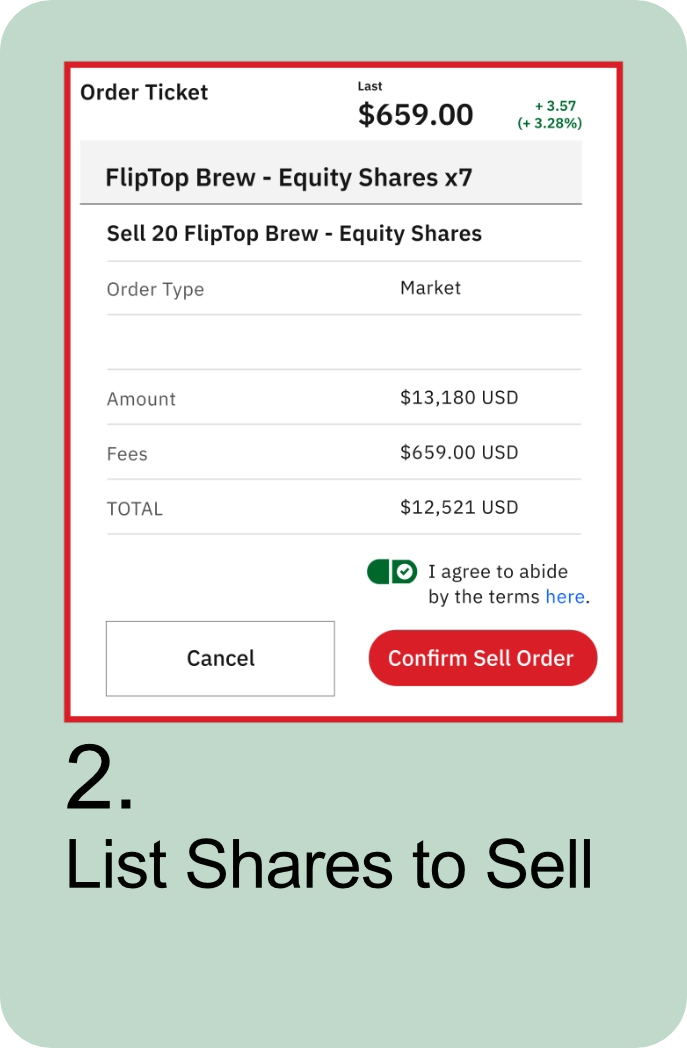

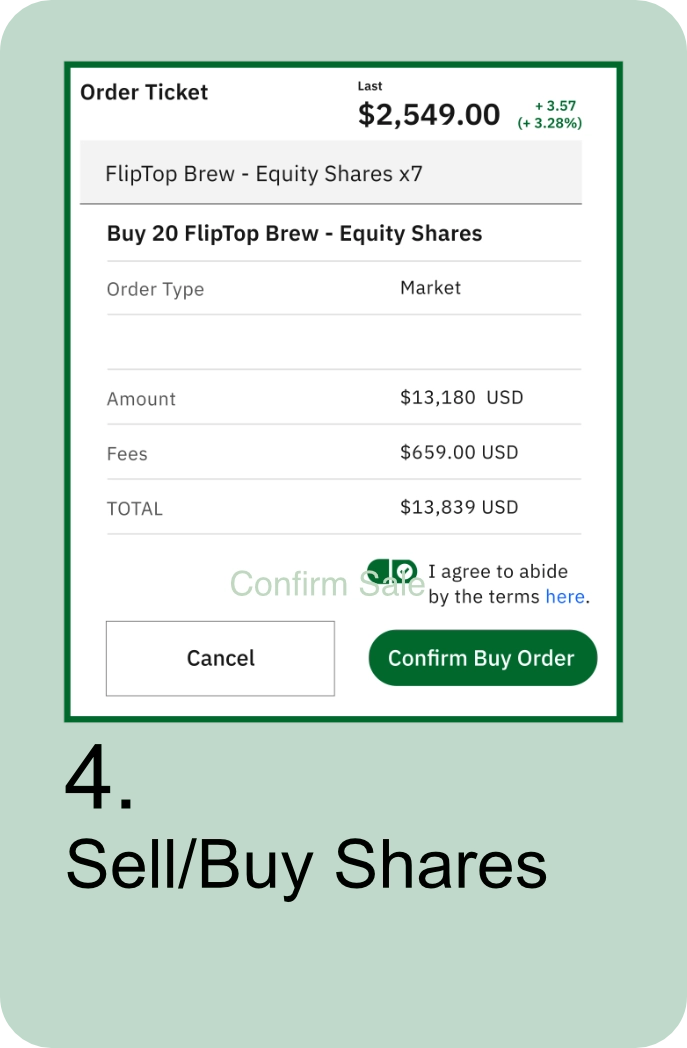
Alternative Trading Systems and Tokenization = Additional Revenue Potential
As regulations clarify around digital assets, our ATS becomes more valuable.
We are one of only ~12 firms of our type in the U.S. with the ATS approval required to lead this shift. We established a regulatory moat using a fraction of the capital our competitors have spent.
market by 2030
Growth Rate (CAGR)
Verified Sources Boston Consulting Group (BCG) & ADDX
McKinsey & Company
ARK Investments
Our CapTech stack powers every stage of the capital lifecycle.
The vertical integration of services between business units provides efficiency and makes it possible to unlock a lower cost of capital for small to medium-sized companies at every point in their capital journey. It also offers multiple sources for revenue over the client lifecycle.
Broker-Dealer
FINRA-member firm handling capital formation, M&A advisory, and corporate finance across Reg CF, Reg D, and Reg A+ offerings.
Transfer Agent
SEC-registered agent managing cap tables, escrow, investor communications, and shareholder record-keeping at scale.
ATS Marketplace
The regulated secondary trading platform where investors can buy and sell private shares. Operational since December 2022.
Tech Platform
Proprietary software powering the ecosystem — white-label portals, marketing, and compliance tools licensed as SaaS.
Regulatory competitive advantage
What is CapTech?
A full-stack infrastructure ecosystem delivering critical capital to growing businesses while providing investors a path to liquidity.
= Capital + Technology

Looking at the Service stack above, you’ll see the Broker-Dealer, Transfer Agent, Tech Platform and the ATS as part of the Broker-Dealer.
With this raise, we plan to add the missing piece of the puzzle, Commercial Banking. There are a number of important reasons to do this, described below.
Why a Bank?
A bank is the bedrock of any financial marketplace.
By bringing banking services in-house, we provide a more secure and efficient environment for moving capital. For investors and issuers, this means more reliable escrow services, faster fund disbursements, and a smoother path to liquidity. Controlling the banking layer removes the friction often found in private markets, making the investment process as seamless as a traditional bank transaction.
For SPHI, acquiring a stake in a community bank helps us eliminate the third-party fees associated with escrow and fund management. This vertical integration simplifies our operations and ensures that the core financial functions of our platform are under our direct control, protecting our margins as we scale. This also de-risks the company’s future.
Because it commands a higher Valuation Multiple.
The Fact Bank-backed firms carry more stable valuations. Comparable Deal SoFi's bank charter was a game-changer. Shareholder Benefit SoFi's stock surged on lower expenses and higher projected margins.
Market valuations for "bank-backed" CapTech firms are traditionally more stable than "software-only" wrappers. The banking layer provides a recurring earnings floor that pure software platforms cannot replicate.
SoFi Technologies. Upon receiving its bank charter in 2022, SoFi utilized its own deposits to fund loans instead of paying interest on high-cost warehouse debt. Analysts called it a "game-changer" for EBITDA margins, leading to a significant valuation expansion relative to pure-play fintech peers.
Following charter approval, SoFi's stock surged as analysts projected higher EBITDA margins due to lower interest expenses. The market re-rated the business from "fintech" to "bank holding company" — a meaningfully higher multiple category.
How SoFi's Bank Charter Makes the Business Better — Motley Fool
Because it captures "Value Leaving the Building."
The Fact Owning the banking layer converts one-time fees into recurring interest-bearing revenue. Comparable Deal LendingClub cut cost of funds 90% and grew revenue 93% by becoming the principal, not the middleman. Shareholder Benefit Revenue that left the ecosystem to a partner bank became retained earnings.
Controlling the banking layer allows a platform to capture the "total wallet share" of a customer, moving from one-time fees to recurring interest-bearing products. Every dollar a customer holds in deposits generates float revenue that currently flows to a partner bank.
LendingClub's acquisition of Radius Bank. After the acquisition, LendingClub reported a 90% reduction in cost of funds. They transitioned from being a middleman that sold 100% of loans to others, to a principal that retained loans on its own balance sheet, significantly increasing return on equity.
LendingClub saw 93% sequential revenue growth shortly after the acquisition, driven entirely by the elimination of third-party revenue sharing. The same transaction volume now produced dramatically more net revenue.
Why becoming a bank is paying off for LendingClub — Banking Dive
Because it mitigates "BaaS" counterparty risk.
The Fact A BaaS dependency is a single point of failure — one regulatory action can freeze client funds overnight. The Proof Synapse's collapse locked 100K+ customers out of $265M. SPHI currently uses third-party escrow. Investor ROI A bank stake is operational insurance against the 50–80% valuation haircuts fintechs suffered when partners were shut down.
Relying on a third-party Banking-as-a-Service (BaaS) intermediary creates a "single point of failure." A regulatory action against the partner bank — not SPHI — can freeze client funds and halt operations entirely, with no recourse.
The 2024–2025 collapse of Synapse Financial Technologies and the subsequent regulatory fallout for Evolve Bank & Trust left over 100,000 customers unable to access $265M in deposits. Because SPHI currently relies on third-party banks for escrow, this acquisition provides "seat-at-the-table" oversight of the ledger.
This functions as "operational insurance," protecting SPHI's valuation from the 50–80% haircuts seen by fintechs who lost their banking partners to regulatory crackdowns. The Synapse fallout made this risk category tangible and imminent — not theoretical.
Because it enables high-efficiency Small Business Lending.
The Fact In-house lending to an existing user base creates a closed-loop revenue ecosystem. Comparable Deal PayPal applied for an industrial bank charter in 2025 to bring $30B+ in small business lending in-house. Shareholder Benefit New interest-bearing revenue lines that were previously invisible on the income statement.
Controlling the banking layer allows a fintech to offer instant, in-house credit products to its existing user base — creating a "closed-loop" ecosystem where the platform earns origination fees, interest income, and servicing revenue simultaneously.
PayPal. In late 2025/early 2026, PayPal applied for an industrial bank charter specifically to bring small business lending in-house. By reducing dependence on third-party banks, they aim to capture higher margins on the $30B+ in loans they've already facilitated.
Analysts view this move as increasing "stickiness" among merchants and unlocking interest-bearing revenue streams previously lost to partners. For SPHI, the same logic applies to issuers and investors already on the platform.
PayPal Pursues Industrial Bank Status — Market Chameleon
Because it solves the "T+3" Liquidity Lag.
The Fact Third-party APIs add 3–5 days to every private securities settlement. The Proof When broker-dealer and bank share one ledger, funds and shares move simultaneously at execution. Investor ROI Faster settlement drives higher ATS volume — revenue scales with velocity.
Standard banking APIs and third-party reconciliations typically require 3–5 days to settle private security trades. For a secondary market in illiquid assets, this delay meaningfully reduces trading velocity and discourages institutional participation.
Vertical integration allows the Broker-Dealer (SPHI) and the Bank to work as a single system. When a trade occurs on the ATS, funds and shares move simultaneously within the same ledger — no third-party reconciliation, no settlement lag.
Increased "velocity of money" leads to higher trading volumes. The ATS becomes a high-speed utility capable of institutional-grade trade frequency, with ATS revenue scaling proportionally.
Because it transforms an Expense into an Equity Asset.
The Fact Partner bank fees are sunk costs. A bank equity stake is a Tier-1 asset on the balance sheet. The Proof SPHI converts 30–50% of margin lost to "infrastructure rent" into owned equity — the PayPal playbook. Shareholder Benefit Companies that own the bank command higher exit multiples in any M&A event.
Fees paid to a partner bank are unrecoverable "sunk costs." Capital used to acquire a bank stake is an investment in a regulated, Tier-1 capital asset that appears on the balance sheet and appreciates with the institution.
SPHI moves from an OpEx model (paying for a service) to a Capital Asset model. By redirecting the 30–50% of gross margin lost to "infrastructure rent" into a direct equity stake, SPHI converts a recurring expense into a balance sheet asset — mirroring PayPal's 2025 bank strategy.
Instead of showing millions in "bank fees" as a line item expense, the balance sheet shows an equity stake in a regulated institution. In any M&A or liquidity event, a company that "owns the bank" commands a significantly higher exit multiple than a software-only competitor.
PayPal Submits Applications for Industrial Bank — PayPal Newsroom
Because it provides "First-Party" Regulatory Certainty.
The Fact FDIC/OCC are tightening oversight of middleware fintechs and their bank partners. The Proof A bank equity stake makes SPHI a principal with regulators — not a downstream dependency. Shareholder Benefit First-party regulatory standing is required to handle billions in annual capital flow.
Regulators (FDIC/OCC) are increasingly skeptical of "middleware" fintechs and are forcing banks to tighten oversight of their partners. The trend is toward direct licensing and away from sponsored access.
Direct equity in a community bank gives SPHI a principal relationship with regulators — with direct examiner access and audit rights, not a downstream dependency on another institution's compliance posture.
This provides the highest level of regulatory certainty — a prerequisite for any platform seeking to handle billions in annual capital flow. Institutional investors require this assurance before committing capital at scale.
Critical Assessment
Valuation Nuance Stricter oversight cuts both ways — the premium requires strong compliance. SPHI Response Our bank partner will manage bank compliance allowing us to focus on compliance for the rest of the stack.
Varo Counterpoint Varo spent $100M on a de novo charter and struggled. SPHI Response We are acquiring an existing stake which is less risky and much more capital-efficient. Expense vs. Asset Bank equity can't be withdrawn — it stays on the bank's balance sheet. SPHI Response Sure, but the reduction in operating expenses directly increases Net Income and EBITDA, which provides a higher valuation multiple for SPHI’s own shares than cash sitting in a bank account. Scale Dependency The benefit only materializes once volume exceeds the cost of running the bank. SPHI Response The good news is we are not 'running' the bank; we are upgrading its delivery mechanism. SPHI benefits the moment we perform a minor system integration, as we have done in the past. The cost and risk of not having a banking partner is much higher than the equity stake.The Critique: While a bank stake increases valuation stability, it also brings the company under stricter regulatory oversight (FDIC/OCC). The benefit to investors is only realized if SPHI maintains a strong compliance culture to avoid regulatory fines that could offset the valuation premium.
The Reality: By partnering with an established institution, our bank partner continues to manage the heavy lifting of direct bank compliance. This strategic division of labor allows SPHI to focus entirely on compliance for the rest of the CapTech stack (Broker-Dealer, ATS, Transfer Agent) without overextending our internal regulatory resources.
The Critique: Varo Bank spent nearly $100M to secure its de novo charter but struggled heavily with the massive overhead required to get it off the ground.
The Reality: SPHI's approach avoids the de novo trap. By acquiring a minority stake in an existing, operational community bank, we bypass the immense initial cash burn and regulatory purgatory. It is a highly capital-efficient, low-risk path to securing the exact same foundational banking and escrow capabilities.
The Critique: The bank equity stake is subject to strict capital adequacy requirements. SPHI cannot withdraw that capital to fund operations — it must remain on the bank's balance sheet to satisfy regulators.
The Reality: While the equity itself isn't a liquid cash account, its strategic presence fundamentally changes SPHI's financial physics. By owning rather than renting banking infrastructure, SPHI eliminates third-party escrow friction, mitigates platform risk, and captures the interest "float." The reduction in operating expenses directly increases Net Income and EBITDA, which provides a higher "CapTech" valuation multiple for SPHI’s own shares. It turns an annual sunk cost into a compounding strategic advantage.
The Critique: The accounting benefit of owning a bank stake is only realized once SPHI's transaction volume exceeds the cost of maintaining the bank's regulatory and staff overhead. Investors should model this threshold explicitly.
The Reality: Scale dependency is a myth in our vertically integrated model because SPHI is not funding the bank's total overhead; we are layering our software over an existing delivery mechanism. The benefits materialize on "Day 1" by solving the massive onboarding friction that plagues the industry—reducing KYC/AML and escrow delays from weeks to minutes. Furthermore, the bank serves as a live regulatory beta site for SPHI's core-replacement software, meaning our ROI is driven by infrastructure-as-a-service margins and software licensing, not just sheer transaction volume.
Market Opportunity
$10 Trillion US SME Asset Base.
Assumes a blended 1.5% annual lifecycle fee capture
(RegD, A+, and CF)
Assumes a 3% blended success fee
FY 2031 Revenue Forecast
Revenue Contribution by Business Line
As the business matures, reliance on capital formation fees decreases while higher-margin recurring revenue from ATS trading, Transfer Agency, and Software grows — reducing cyclicality and increasing predictability.
Note: Percentages represent share of total projected revenue per year. Dollar figures in $000s. All figures are projections. Click legend to isolate a line.
Company Milestones
Nine years of deliberate infrastructure-building — each milestone a regulated capability that would cost a competitor years and millions to replicate.
Each milestone represents a completed regulatory approval, product launch, or operational capability — not a roadmap item.
Core Leadership

David Duccini
Founder & CEODavid founded Silicon Prairie in 2016. He has led the company through multiple SEC and FINRA regulatory approvals, building the full-stack private capital infrastructure that exists today.

Cedric Long, CFA
President, Broker-DealerCedric oversees Silicon Prairie's FINRA-member broker-dealer operations. He holds the Chartered Financial Analyst designation and brings 30 years experience.

Jade Barker
President, Transfer AgencyJade leads Silicon Prairie's SEC-registered transfer agent subsidiary, managing cap table administration, escrow services, and investor reporting.

Wiley H. Sharp, III
Senior Investment BankerWiley brings decades of investment banking and analysis experience, advising on M&A transactions, syndication, and corporate finance strategy.

Ally Miettunen
Operations DirectorAlly manages day-to-day platform operations and coordinates across Silicon Prairie's subsidiaries. Series 7 in process. Background includes SpotOn, Enterprise, and Sezzle.

Hunter Brennan
FINOP & Securities RepresentativeHunter handles securities transactions and compliance reporting and serves as Financial and Operations Principal (FINOP). Series 7, 28, 63, and 82 credentials.

Dylan Duncan
Capital ConsultantDylan manages the online capital formation pipeline for SPHI. Previously with The Norstar Group in Blockchain and Precious Metals.

Daniel Life
Product Marketing Director20+ years in tech startups, Silicon Valley successful exit, owned 2 companies. Daniel leads product strategy and communications.

The SAFE+R: A New Kind of Investment Instrument
SPHI is raising up to $5 million through a novel instrument: the SAFE+R — a Simple Agreement for Future Equity with a built-in Re-Marketing feature connected directly to SPHI's own ATS. For the first time, investors in a SAFE have a structured path to potential liquidity before conversion.
for Future Equity
The SAFE+R is offered pursuant to exemptions under applicable securities laws. Re-marketing on the ATS is subject to applicable regulations and market conditions; liquidity is not guaranteed. Review the Private Placement Memorandum before investing. $5,000 minimum investment.
Ready to invest in Silicon Prairie?
Choose your offering:
